
When data systems operate in disconnect, nothing works the way it should
Enterprise IT runs on a patchwork of cloud platforms, SaaS tools, on-prem systems, and inherited infrastructure, and those mismatched layers create friction whenever data moves. EASL creates a stable layer that keeps data flowing and prevents fix-and-repeat cycles without forcing a reinvention of the underlying stack.
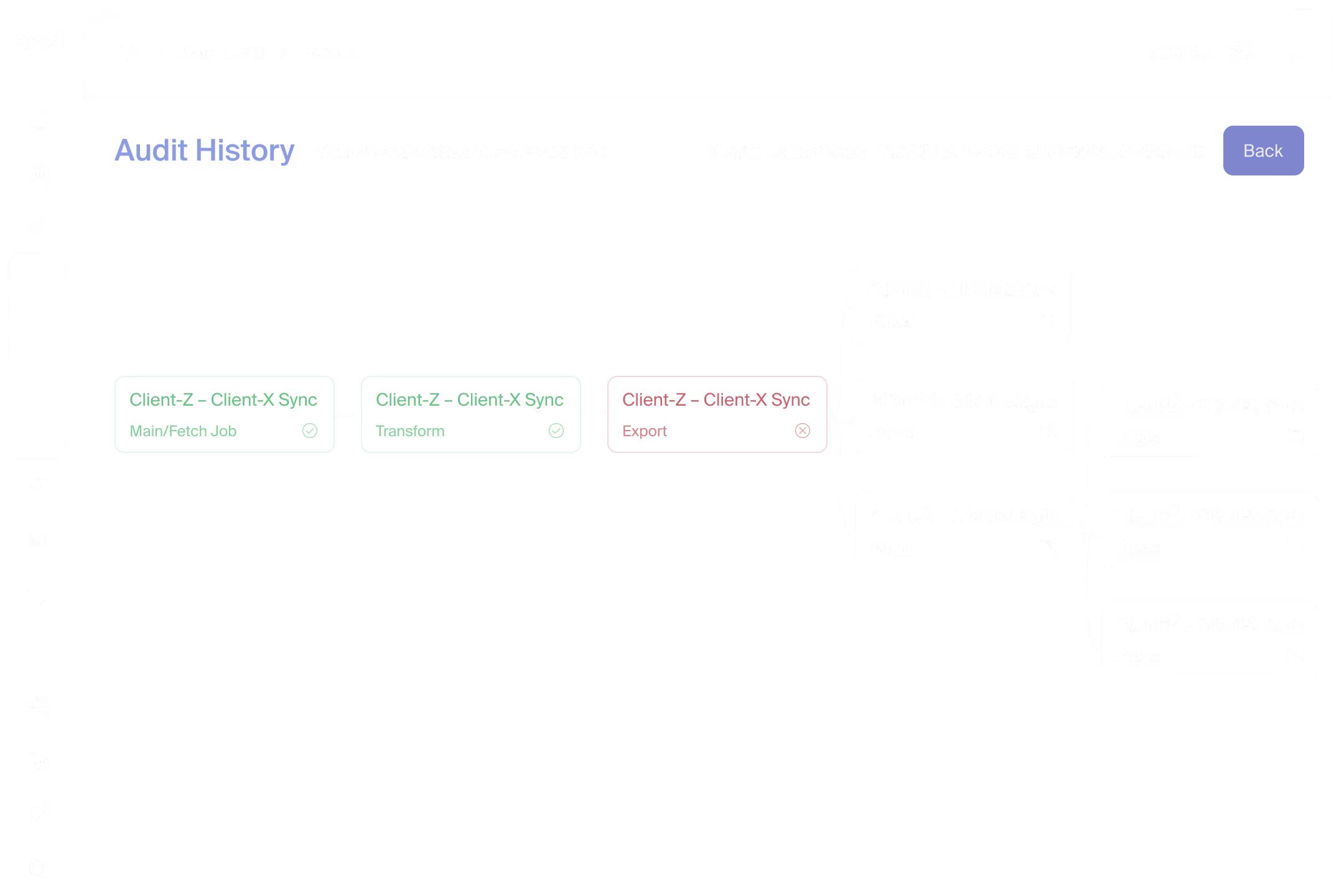
The data friction slowing down every enterprise IT team
Internal systems built at different times, in different styles, with no shared structure
Integrations that break whenever formats, definitions, or partner APIs shift
Legacy environments that must operate alongside modern stacks for months or years
Fragmented data spread across SaaS, cloud, and on-prem infrastructure
Manual validation tasks that absorb entire sprints and strain engineering capacity
Reconciliation cycles that drain budget and delay reporting
Security restrictions that complicate even basic data movement
Where EASL works within the enterprise IT ecosystem
Systems IT
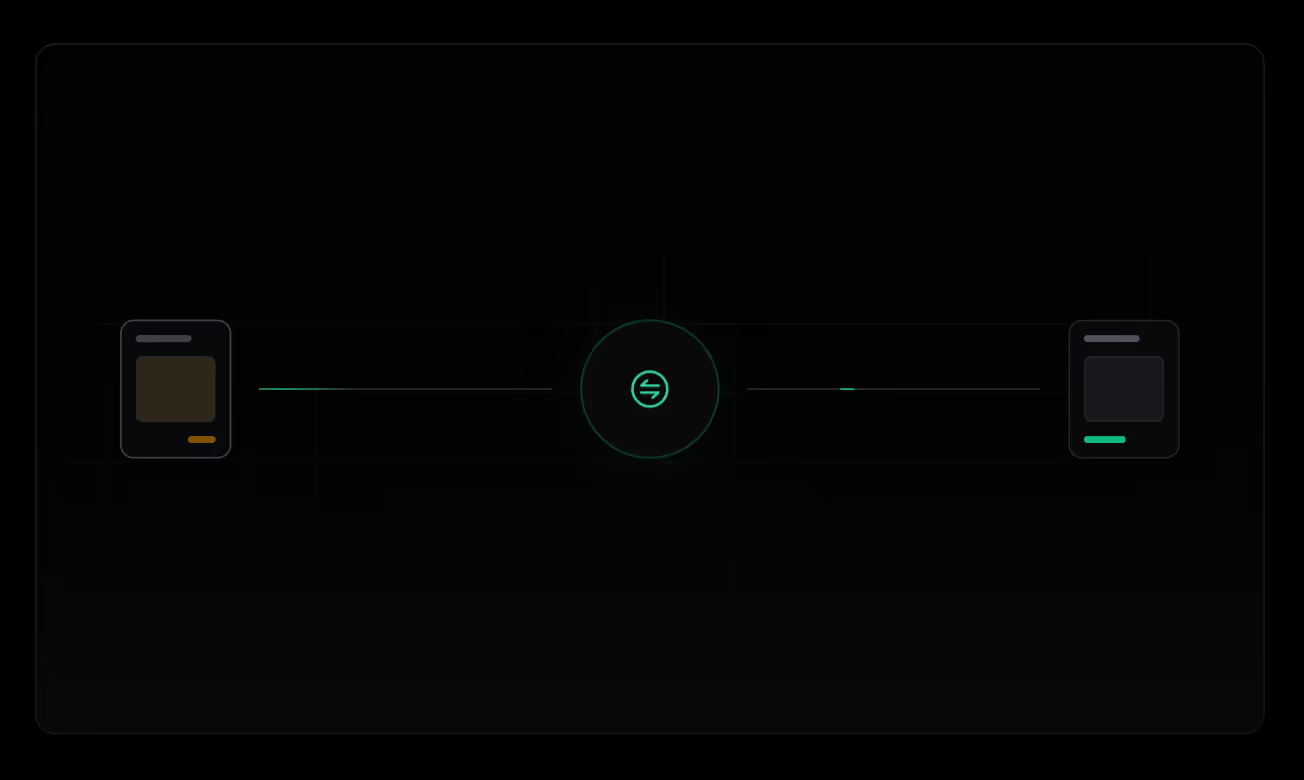
Systems teams don't get to pause data flows during modernization projects, product launches, or implementations after an acquisition. EASL helps systems teams maintain reliable data flow even when the architecture it's built on is inconsistent or in transition.
Rebuilding or stabilizing customer-data architecture across disparate systems
Streamlining complex transformations
Replacing maintenance-heavy legacy data pipelines
Enabling access, validation, and reconciliation across thousands of operational records
Identity and Access Management
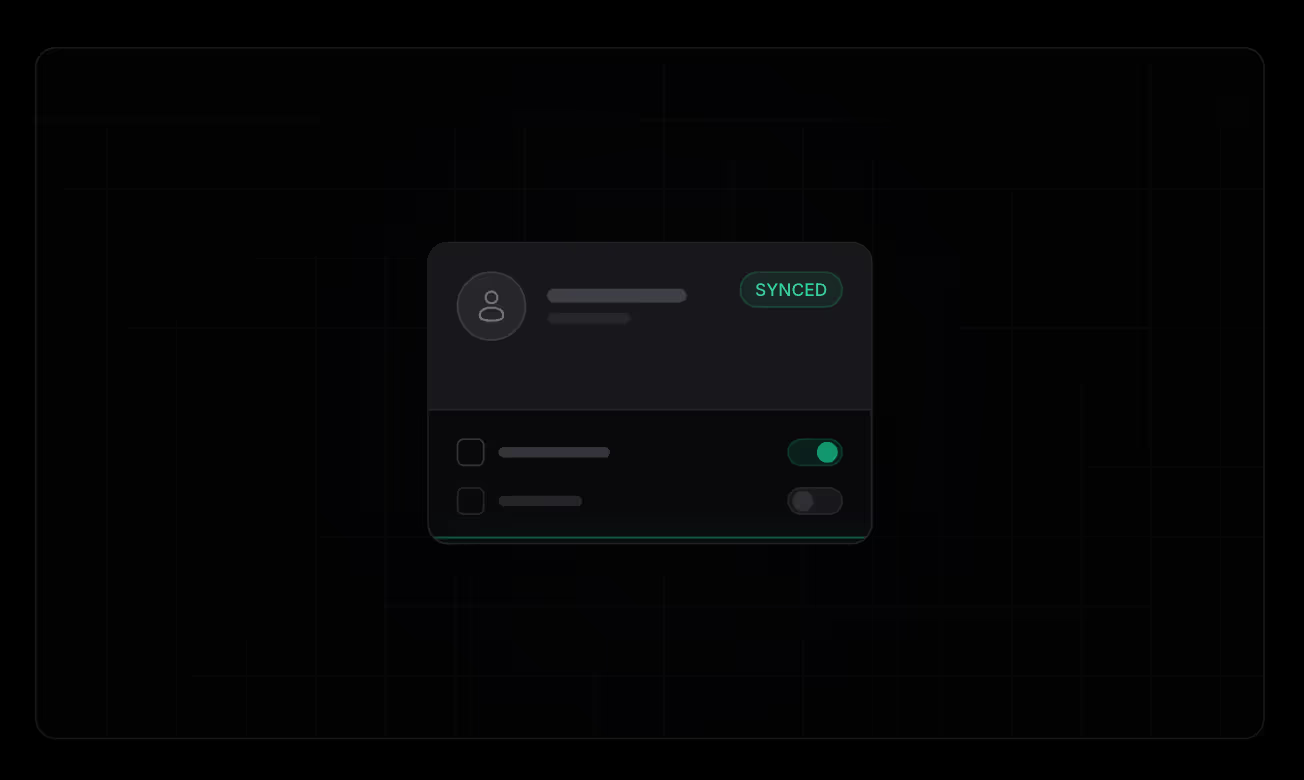
Wrong provisioning data creates security gaps and compliance violations. It also means frustrated end users locked out of systems they need. EASL keeps identity records clean and synchronized across platforms without forcing teams into painful rebuilds every time systems change.
Normalizing identity records across platforms during migrations
Automating rule-based data triggers for provisioning or deprovisioning
Replacing repetitive reconciliation processes with continuous validation
Reducing reliance on custom scripts that break with upstream changes
Healthcare IT Services
Healthcare IT operates under strict governance with zero tolerance for data errors; incorrect patient identities can trigger failed audits and serious compliance consequences. EASL supports healthcare-aligned IT teams managing complex data flows inside large enterprise environments.
Managing patient-identity cleanup across internal and third-party systems
Supporting legacy-to-modern ERP interoperability without service disruption
Ensuring audit-ready lineage in environments with strict governance
Reducing manual data prep for operational and clinical reporting

How EASL rewrites the rules for enterprise data movement
EASL brings a DataDevOps approach that adapts to shifts in enterprise IT environments instead of fighting them. Data moves through a flexible, controlled workspace that stays stable even when the architecture around it does not.
Pipelines that absorb
definition, format, and schema changes without rebuilds
Real-time validation
that catches and resolves issues before they reach downstream systems
Parallel processing
that keeps legacy and modern environments running during migrations
A unified operational layer
that reduces platform-to-platform friction
Full lineage and auditability
for sensitive or regulated data
Deployment models
that support cloud, on-prem, or hybrid environments
Secure processing
with full encryption and containerized consistency
Creating the data backbone for a global media merger
The challenge
Two media-tech organizations running fundamentally incompatible platforms
Fragmented data models and different architectural assumptions
Custom-built integrations unable to support merger-level scale
Engineering teams overloaded by reconciliation and troubleshooting
What EASL delivered
Unified data environments without forcing either team to change core systems
Adaptive pipelines that replaced inflexible integrations
Stable, high-volume data flow maintained throughout the transition
Architecture that supported rapid parallel operations during integration
Business impact
90% faster implementation timeline
$400K annual OpEx savings
$500K in avoided CapEx by preventing another custom-build effort
Engineering teams refocused on product and platform improvement
See more real-world results in our case study library.
Enterprise IT Data Movement FAQs
How does EASL support complex, multi-system enterprise environments?
EASL provides an adaptive data-movement layer that stabilizes systems built at different times, in different formats, and for different needs. Access, validation, transformation, and reconciliation happen in motion, keeping data consistent across the entire environment.
Can EASL help with modernization or migration projects?
Yes. EASL enables legacy and modern systems to run side-by-side while data is mapped and validated. This reduces risk and shortens the path to fully retired legacy infrastructure.
How does EASL handle identity-related data?
Identity environments depend on consistency. EASL maintains clean, synchronized records, automates rule-based triggers, and reduces the reconciliation work that slows down provisioning and governance teams.
Does EASL reduce engineering effort?
Yes. Manual validation, brittle transformations, and routine reconciliation work are absorbed by the platform. Engineering teams recover time for higher-value work rather than maintaining pipelines that constantly break.
What kinds of enterprise data can EASL handle?
Operational data, identity records, transactional events, SaaS platform outputs, cloud and on-prem system data, logs, metadata, and hybrid datasets—structured or semi-structured—at scale.
Still got questions? Contact us.
Turn your legacy systems of record into systems of work with EASL.
We're data geeks who love to chat with anyone who appreciates clean infrastructure and issue-free data streams.